 EN
EN  Español
 get a free quote

Bottom line: what to buy and why
For most signage, tarp, and canopy tie-downs, the best all-around choice is custom ball bungee cords sized to your wrap length with UV-resistant shock cord and a high-impact ball. If you select the right loop length and cord diameter, you get fast installs, consistent tension, and fewer snapped grommets than rigid ties.
A practical starting point is: 6–9 inch loop length for banners and tarps, 9–12 inch for thicker framing or wide wraps, and 4–6 mm cord for everyday outdoor use. Then customize material and ball size based on sun exposure, wind, and how often you’ll reuse the ties.
- Pick loop length so the cord stretches about 20–40% when installed (enough tension without over-stressing grommets).
- Choose UV-resistant cord and corrosion-resistant ball/finish for long-term outdoor jobs.
- Order customs when you need consistent spacing, branded colors, odd lengths, or bulk quantities for crews.
How ball bungee cords work (and why they beat zip ties)
Ball bungee cords are elastic loops terminated with a ball. You pass the loop through a grommet or around a frame and secure it over the ball. The elastic section absorbs gusts and vibration, which reduces shock loading on fabric, hems, and grommets.
Key advantages in real installs
- Faster on/off than knots and many straps (especially for crews rotating banners).
- Less grommet tearing than rigid ties because the cord flexes under wind load.
- Reusable: swap signs, adjust tension, or reposition without cutting anything.
When they’re not ideal
If you need zero movement (for example, a rigid safety barrier) or you’re trying to restrain heavy loads, ball bungees are the wrong tool. They’re designed for tensioning and light-to-moderate securing, not load-rated rigging.
Sizing custom ball bungee cords: a simple, repeatable method
“Length” is the most misunderstood variable. For ball bungees, you’re usually choosing a loop length that must wrap around a pipe, fence, or frame while stretching to maintain tension. A reliable approach is to measure your wrap and target a moderate stretch.
Step-by-step sizing
- Measure the wrap path: through the grommet, around the frame/pipe, and back to the ball seat point.
- Choose a target stretch range: 20–40% is a practical balance for most banners and tarps.
- Calculate loop length: Loop Length ≈ Wrap Length ÷ (1 + Stretch).
- Confirm clearance: make sure the ball can pass through and seat properly, and the loop fits the grommet size.
| Wrap Length (in) | Target Stretch | Suggested Loop Length (in) | Typical Use Case |
|---|---|---|---|
| 8 | 25% | 6.4 | Banner to thin frame / chain link |
| 10 | 30% | 7.7 | General tarp tie-down |
| 14 | 35% | 10.4 | Thicker framing / deeper wraps |
Strength, stretch, and durability: what matters in the field
With ball bungees, “stronger” is not always better. Overly stiff cord can transfer wind shock into grommets and hems. The goal is controlled elasticity with materials that survive your environment.
Cord diameter and elasticity
As a practical guideline, 4–6 mm cord is a common sweet spot for outdoor signage, tarps, and tent sidewalls. Thicker cord can hold tension with less stretch, but it can also increase stress on attachment points if overtightened.
UV and weather resistance
- UV-resistant sheath helps slow sun damage for year-round outdoor use.
- Water and grit exposure favors tightly woven outer jackets to reduce abrasion.
- Cold-weather installs benefit from materials that stay flexible rather than going stiff and brittle.
Ball type and failure prevention
The ball should be impact-resistant and sized to seat reliably without slipping back through the loop. In practice, ball failures often come from poor material (cracking) or mismatched sizing (ball too small for the loop or too large for the grommet path).
Where custom ball bungee cords pay off
Off-the-shelf bungees are fine for one-off jobs. Custom makes sense when repeatability, branding, or a non-standard fit reduces labor or replacements.
High-value use cases
- Large banner programs: consistent loop length speeds installs and keeps tension uniform across grommets.
- Tent rental operations: color-coding by length reduces sorting time and mis-matches in the field.
- Industrial covers: custom length avoids over-stretching that shortens cord life.
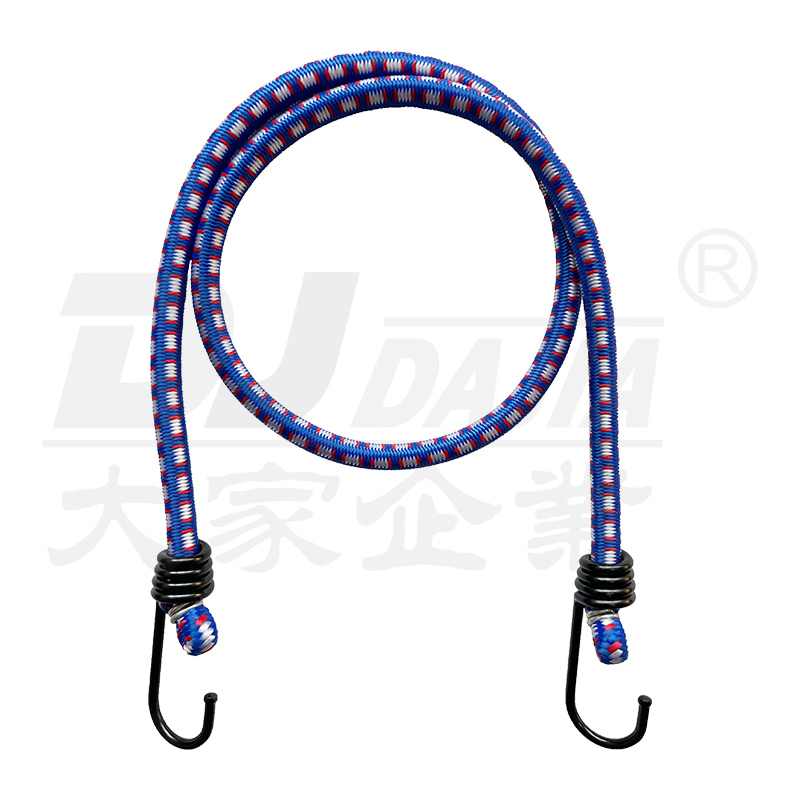
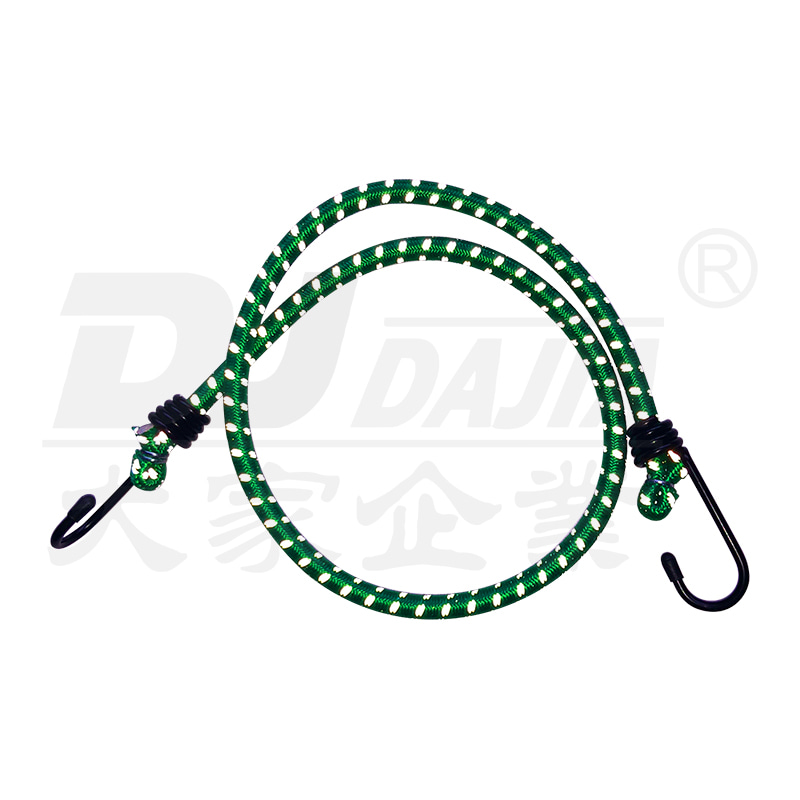
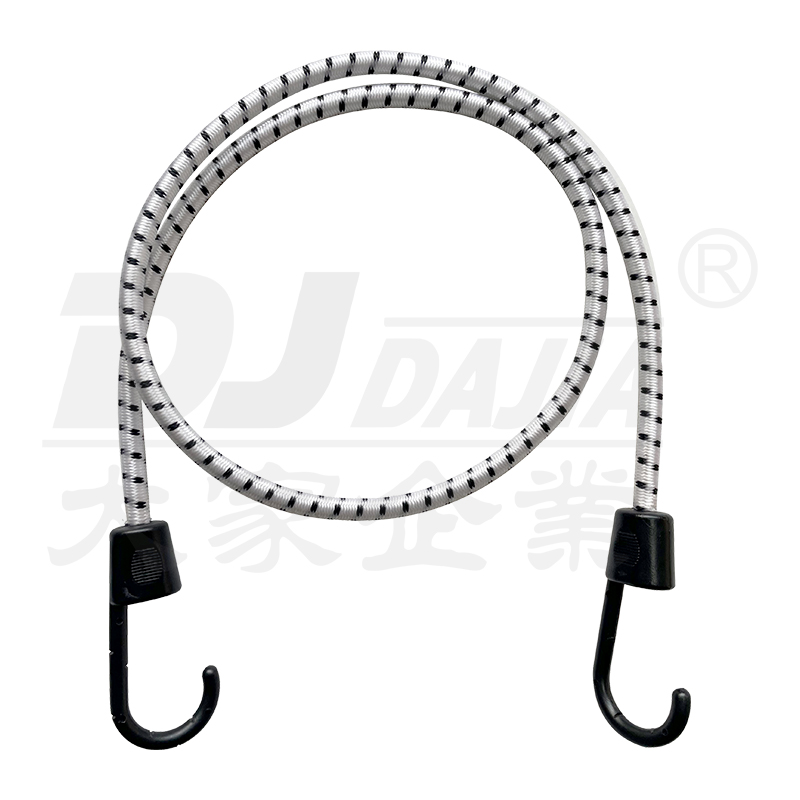
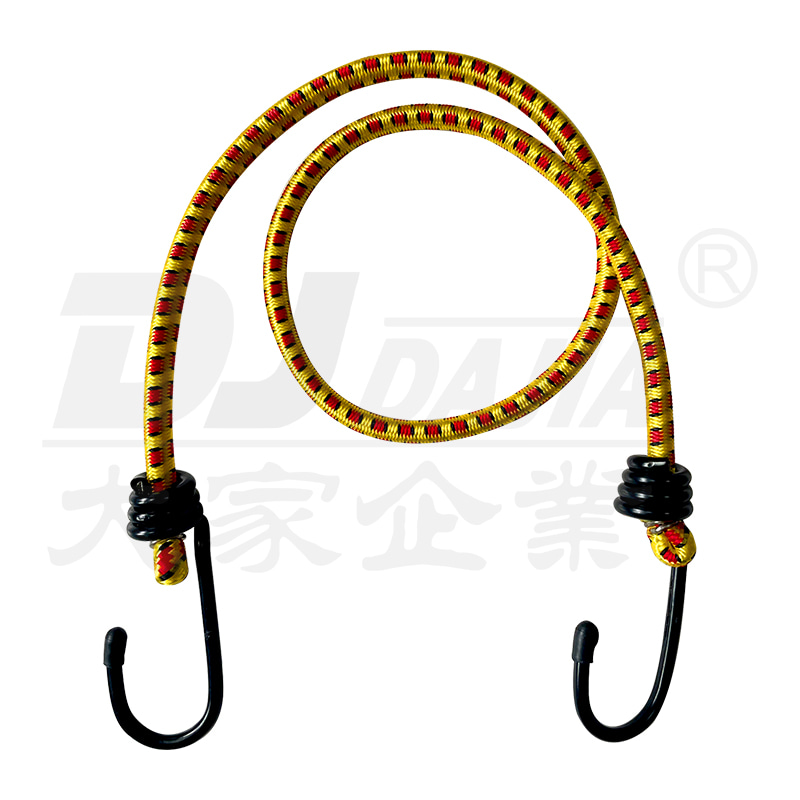
- Branding: matching cord/ball colors supports a clean presentation for events and retail signage.
Customization options that matter most
| Custom Option | What It Solves | Example |
|---|---|---|
| Loop length | Proper tension without over-stretch | 9 in loop for thicker frames |
| Cord diameter / jacket | Durability in UV, abrasion, weather | UV-resistant sheath for outdoor signage |
| Ball size / material | Reliable seating and impact resistance | Larger ball for gloved installs |
| Color coding | Faster sorting and fewer mistakes | Red = 6 in, Blue = 9 in |
Installation tips that reduce grommet damage
Most failures blamed on “weak bungees” are actually installation issues: too much stretch, bad spacing, or sharp edges cutting the jacket. A few habits can dramatically extend service life.
Do this every time
- Aim for 20–40% stretch; if you need more, choose a longer loop instead of forcing it.
- Avoid sharp edges: route around smooth pipe or add edge protection where abrasion is likely.
- Even spacing: tension should be distributed so one corner isn’t carrying the entire wind load.
- Use enough ties: more bungees with less stretch is often safer than fewer bungees pulled tight.
Common mistakes to avoid
- Over-tightening: excessive tension can tear grommets or deform hems over time.
- Using one length for everything: mismatched loops lead to inconsistent tension and early wear.
- Ignoring UV: outdoor exposure without UV-resistant cord accelerates cracking and loss of elasticity.
How many ball bungees do you need for a banner or tarp?
A practical approach is to place ties at every grommet and, if wind is a concern, tighten the spacing by adding grommets or using intermediate attachment points. For many outdoor banners, a typical spacing range is every 12–24 inches depending on banner size and wind exposure.
Example rule-of-thumb scenarios
| Item | Typical Spacing | Why |
|---|---|---|
| Indoor banner | 18–24 in | Low wind load, minimal flutter |
| Outdoor banner (moderate wind) | 12–18 in | Distributes gust loads across more points |
| Tarp cover on frame | 12–16 in | Reduces flapping and abrasion points |
Conclusion: the safe, efficient spec for custom ball bungee cords
Choose custom ball bungee cords by sizing the loop to your wrap length and targeting 20–40% stretch in use. Pair that with UV-resistant shock cord, an impact-resistant ball, and consistent spacing across grommets to reduce fabric damage and improve reliability.
If you standardize a few loop lengths (for example, 6–9 inch for most signage and 9–12 inch for thicker frames), label or color-code them, and avoid over-tightening, you’ll get faster installs and longer service life with fewer field failures.