 EN
EN  Español
 get a free quote

How D Style Carabiners and Round Bungee Cords Work Together
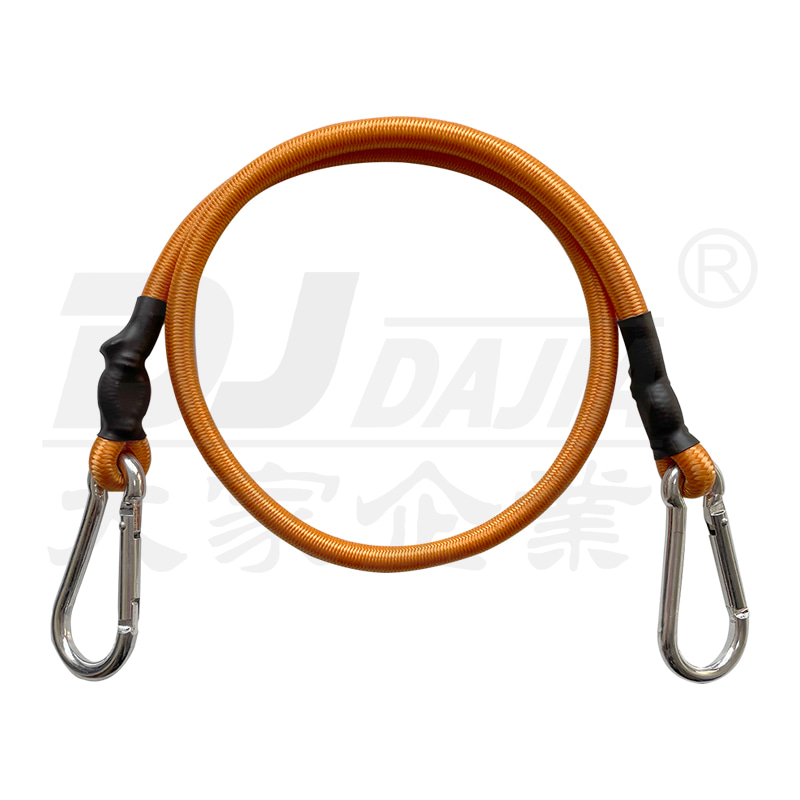
D style carabiners and round bungee cords are often paired for quick clipping, bundling, and temporary tensioning. The intent is usually convenience: fast setup, fast removal, and adjustable tension. However, the safety and reliability of the setup depend on matching the carabiner’s load rating and gate style to the forces a round bungee cord can generate—especially during sudden release or recoil.
A D shape concentrates force along the spine (the strongest axis), making it a practical choice when you want the load centered and stable. Round bungee cords, by contrast, are elastic and can create dynamic forces (snap-back) that behave very differently from static rope or webbing. The key is to treat a bungee system as temporary restraint or organization, not as overhead lifting or life-safety hardware.
- Best for: securing tarps, bundling gear, light cargo stabilization, campsite setups, and shop organization.
- Not for: climbing, fall arrest, hoisting, towing, or any application where failure could cause severe injury.
Choosing the Right D Style Carabiner for Elastic Loads
Not all D style carabiners are equal. Some are decorative or accessory-grade, while others are engineered and marked with rated capacities. For use with round bungee cords, prioritize a carabiner that resists accidental opening and supports stable loading along the spine.
Look for Clear Load Markings and Use Them Correctly
A rated carabiner typically indicates strength in kilonewtons (kN) or a working load limit (WLL). As a practical reference, 1 kN is roughly 225 lbf. If a carabiner is not marked with a rating, treat it as accessory-only and keep it out of any scenario where recoil could hit a person or damage property.
Prefer a Captive or Locking Gate When Possible
- Locking gate: reduces accidental unclipping if the bungee shifts or vibrates.
- Captive eye / anti-rotation feature: helps prevent the carabiner from turning into a weak orientation.
- Smooth basket (no sharp edges): reduces abrasion and cutting risk to the bungee sheath.
| Feature | Why it matters with a bungee | What to choose |
|---|---|---|
| Rating marks (kN/WLL) | Avoid unknown strength during recoil | Clearly stamped rating |
| Gate type | Prevents unintended opening under vibration | Locking preferred |
| Basket finish | Reduces bungee wear and cutting | Rounded, burr-free |
| Size / opening | Prevents side loading and bunching | Adequate clearance for the hook/knot |
Selecting Round Bungee Cords by Diameter, Stretch, and Hooks
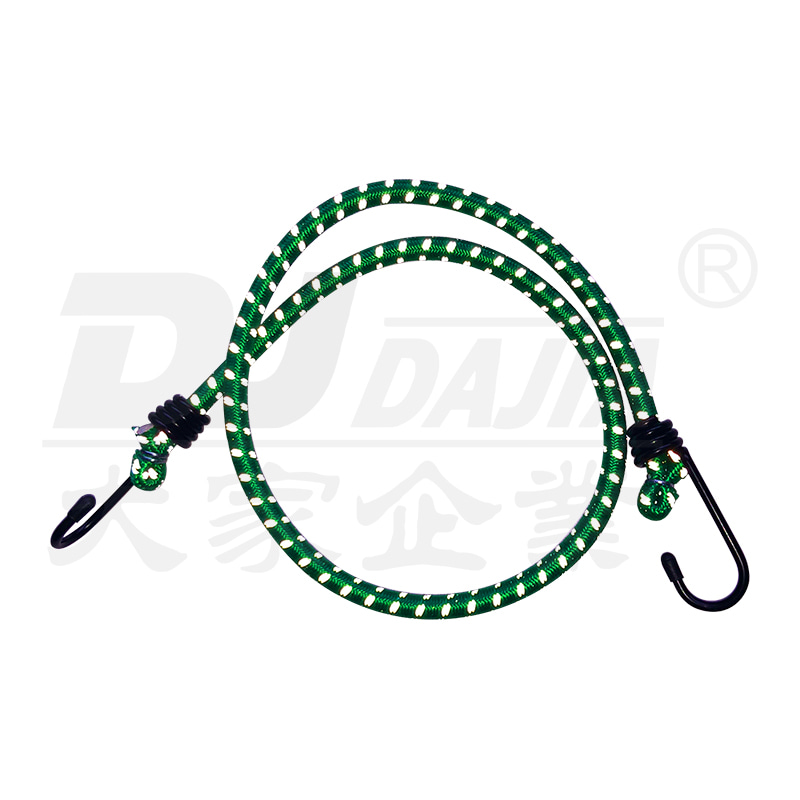
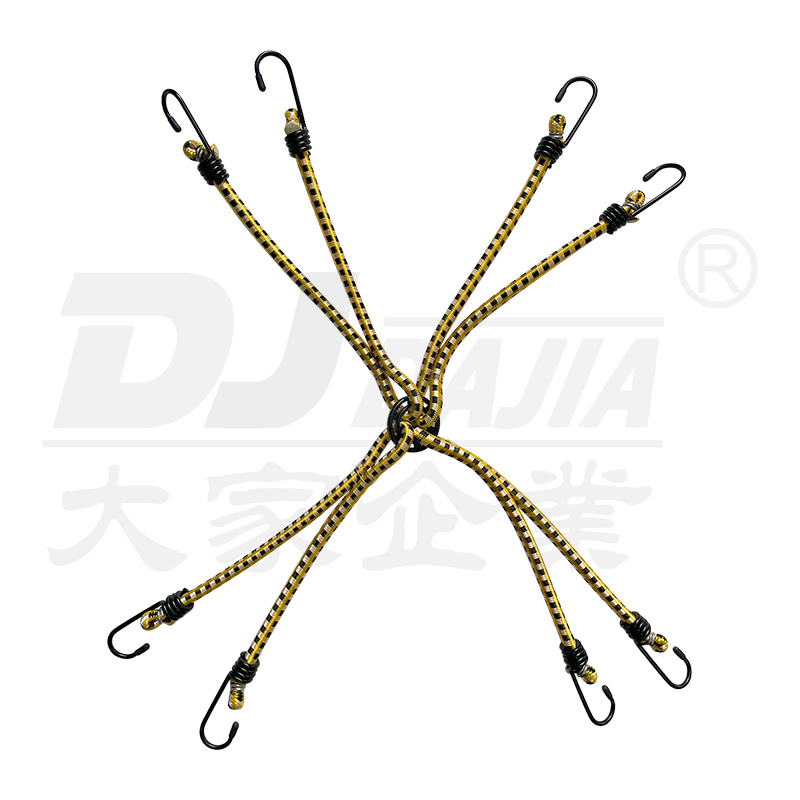
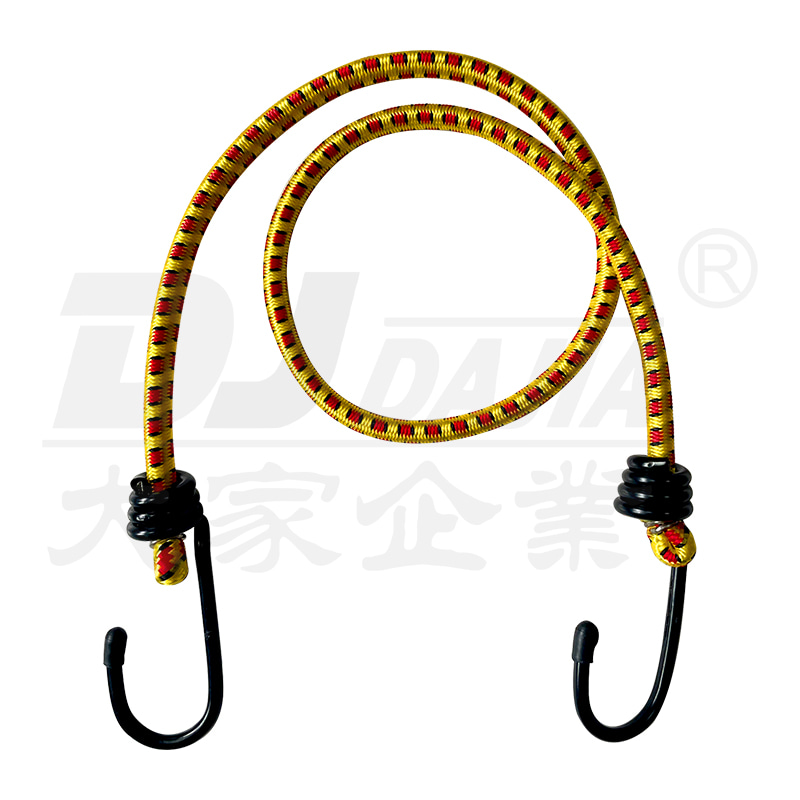
Round bungee cords vary widely in diameter, core construction, sheath durability, and hook quality. Two cords that “look similar” can behave very differently under tension. A practical selection approach is to match the cord to the task and treat it as a consumable component that will eventually wear out.
Diameter and Stretch Control the Behavior
Larger diameter cords generally tolerate abrasion better and provide more usable tension range. Overstretching accelerates damage. As a conservative practice, aim to keep elongation moderate; if you need extreme stretch to make the setup work, choose a longer cord instead.
Hook Design Can Be the Weak Link
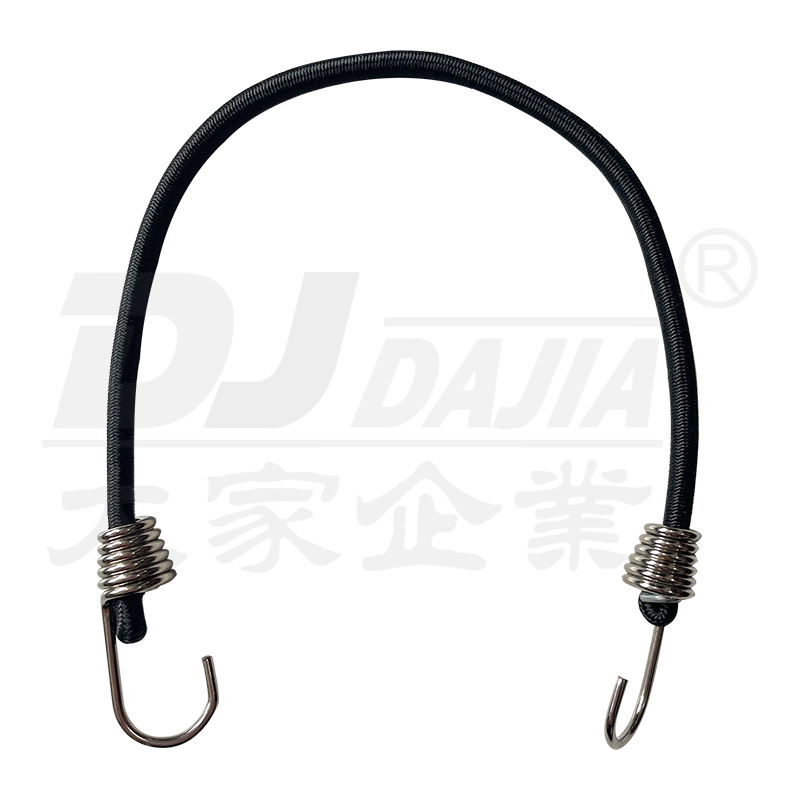
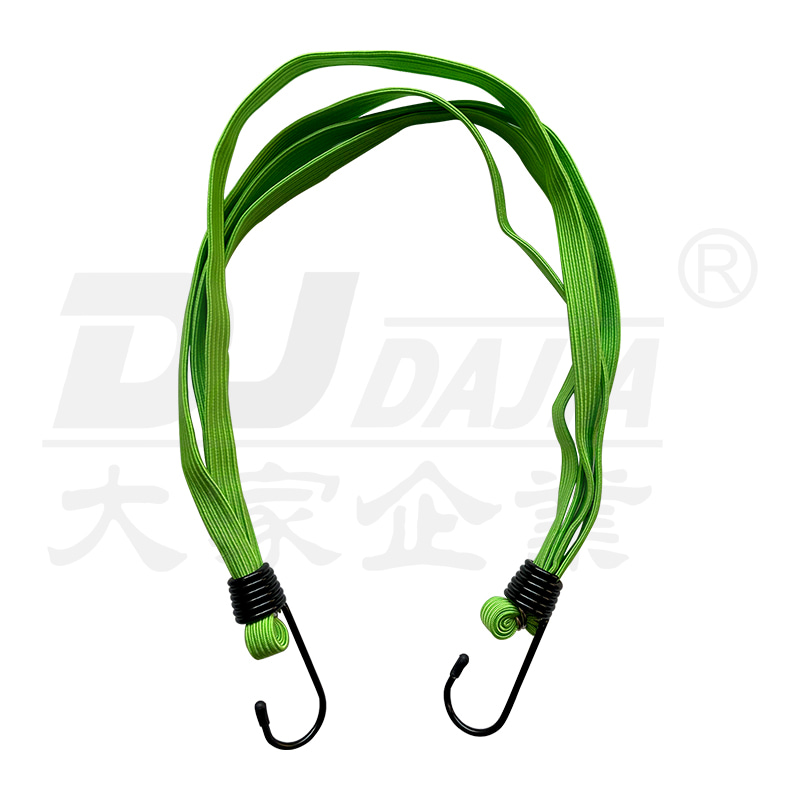
- Wire hooks can open or deform under load; plastic-coated hooks reduce scratching but may hide corrosion.
- If a hook tip can slip off an anchor, a carabiner can serve as a safer “closed loop” interface.
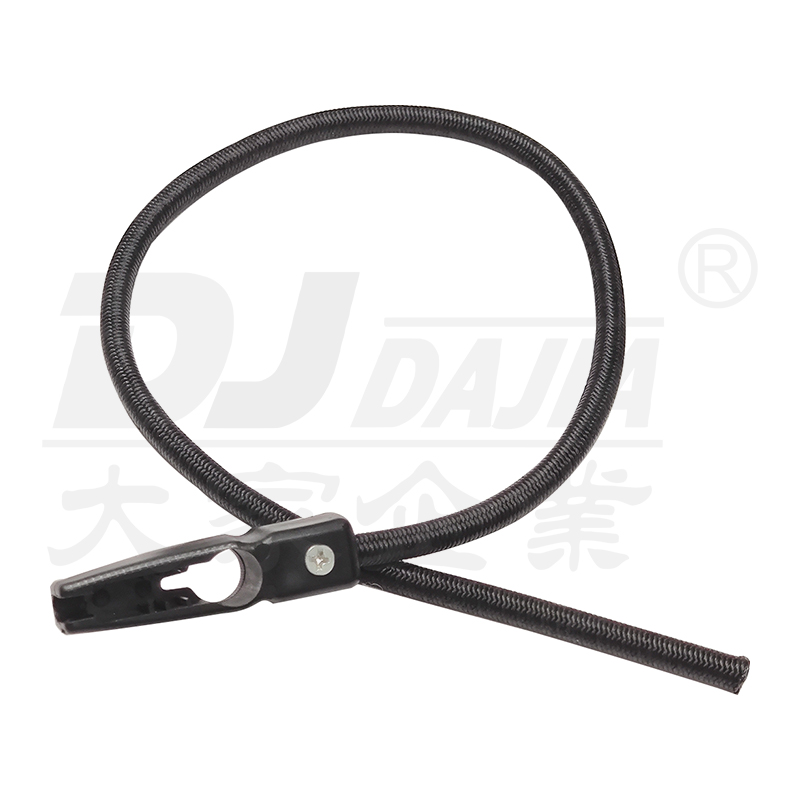
- Use a cord with a robust end fitting, or tie the bungee to create a loop instead of relying only on an open hook.
Practical rule: in many everyday setups, the most likely failure is not the D style carabiner spine—it is the bungee sheath abrasion, the hook deformation, or an anchor point that allows slip.
Safe Setup Patterns That Reduce Slip and Snap-Back
The goal is to keep the bungee aligned, minimize sharp bends, prevent the carabiner from rotating into a weak orientation, and reduce the chance of a sudden release. The following patterns work well in garages, vehicles, and outdoor use.
Pattern A: Carabiner as a Closed Anchor Interface
Clip the D style carabiner to the anchor point first (rack, tie-down ring, eye bolt). Then attach the round bungee cord to the carabiner rather than directly to the anchor. This reduces abrasion on the bungee and helps prevent a hook from slipping free.
- Best use: vehicle cargo points where edges or burrs might damage the cord.
- Benefit: creates a smoother, more predictable attachment point.
Pattern B: “Loop-to-Carabiner” Instead of Open Hook
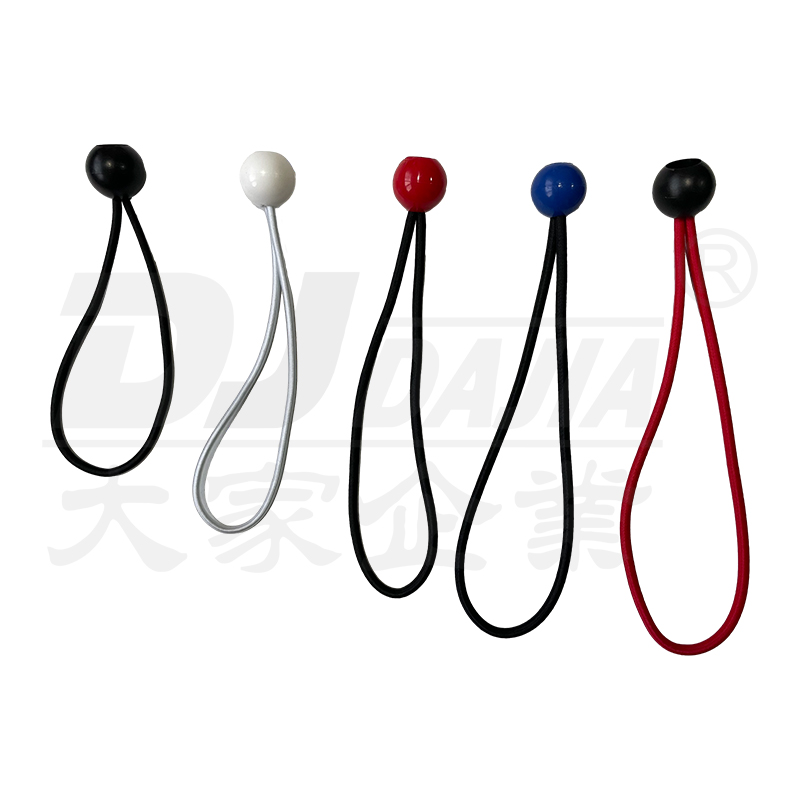
If your round bungee cord has open hooks, consider forming a loop (using a cord loop end, a knot suitable for elastic cord, or a dedicated end fitting) and clip the loop into the carabiner. A closed loop reduces accidental detachment.
Pattern C: Dual Bungees, Lower Tension Each
Instead of one heavily stretched cord, use two round bungee cords with less stretch. This reduces peak recoil energy if one side slips and can improve load stability.
Practical example: securing a storage bin lid or a folded tarp—two cords at mild stretch often hold better than one cord at high stretch, and the system is easier to adjust.
Common Failure Modes and How to Avoid Them
Most problems with D style carabiners and round bungee cords come from orientation, wear, and uncontrolled release. Addressing these failure modes materially improves reliability.
Gate Loading and Side Loading
Carabiners are strongest when loaded along the spine with the gate not bearing the load. If the bungee pulls sideways, the carabiner can rotate and load the gate. The more the cord vibrates (driving, wind, bouncing gear), the higher the risk of unintended unclipping.
- Keep the load centered: ensure the bungee sits in the basket, not on the gate.
- Reduce rotation: use a captive-eye style or clip through a stable anchor that limits twisting.
Abrasion at Contact Points
Round bungee cords fail faster when rubbed over sharp corners or gritty surfaces. A D style carabiner can act as a sacrificial interface: the metal takes the wear instead of the cord sheath. Inspect cords regularly; visible sheath damage is a sign to retire the cord.
Snap-Back Risk During Release
Elastic energy can cause hooks or clips to recoil toward the user. Treat any tensioned round bungee cord like a loaded spring. A conservative best practice is to unhook while standing to the side and maintaining control of the cord end.
Key takeaway: control the free end before it becomes free. If you cannot maintain control, reduce tension or re-route the setup.
Practical Sizing Guide: Matching Carabiner Size to Round Bungee Cord
Sizing is not only about “will it fit.” It is about avoiding bunching, pinching, and forced angles that cause side loading. Choose a D style carabiner with enough gate opening and basket space to accommodate the bungee end hardware (hook, knot, or loop).
| Scenario | What goes wrong | Better approach |
|---|---|---|
| Hook barely fits | Gate loads and can pop open | Use a larger opening or a loop end |
| Cord pinched at basket | Sheath wears quickly; cord weakens | Choose a smoother, roomier basket |
| Carabiner rotates sideways | Side loading reduces effective strength | Use captive eye or re-route for alignment |
| Bungee rubs anchor edge | Abrasion and premature failure | Clip carabiner to anchor, bungee to carabiner |
Use Cases and Concrete Setup Examples
Below are practical ways to combine D style carabiners with round bungee cords that align with typical user intent: quick restraint, modular attachment, and repeatable organization.
Example: Tarp Tie-Down on a Roof Rack (Light Duty)
Clip two D style carabiners to rack crossbars. Attach round bungee cords from tarp grommets (or tarp loops) to the carabiners, keeping stretch moderate. Add a second cord as redundancy on wind-facing corners. The carabiner reduces abrasion and keeps the tarp attachment easy to remove.
Example: Garage Wall Organization (Tools, Hoses, Extension Cords)
Mount anchor points (pegboard hooks, wall rings). Clip a D style carabiner to each anchor and use short round bungee cords to retain coiled items. This makes a simple “clip-and-go” system where each coil is captured and less likely to fall.
Example: Cooler Lid or Bin Lid Retention
Instead of one tightly stretched cord, use two shorter round bungee cords attached to D style carabiners on each side. This balances tension and reduces the chance of a single-point slip. The practical outcome is more stable retention with less recoil risk if one end releases.
Inspection, Maintenance, and Replacement Triggers
Reliability comes from routine inspection. Round bungee cords degrade with UV exposure, abrasion, and repeated stretching. D style carabiners can develop burrs, corrosion, or sticky gates that undermine safe clipping.
Replace a Round Bungee Cord If You See Any of the Following
- Frayed sheath, exposed inner strands, or flat spots where the cord has been pinched.
- Cracked, brittle, or sun-faded material that no longer rebounds smoothly.
- Deformed or loose hooks/end fittings that can slip unexpectedly.
Service a D Style Carabiner If the Gate Is Not Smooth
A clean, responsive gate is essential for predictable performance. If the gate sticks, doesn’t close fully, or shows damage at the nose, remove the carabiner from service. For non-life-safety setups, a sticky gate still increases accidental unclipping risk under vibration.
If you want a single decision rule: retire components at the first sign of unreliable closure or damaged elastomer. The cost of replacement is typically far lower than the cost of an incident.