 EN
EN  Español
 get a free quote

What an ATV Retractable Cargo Net For Luggage Rack Should Solve
An ATV Retractable Cargo Net For Luggage Rack is meant to control the two most common problems on rough terrain: load bounce and load migration. Even a well-packed rack can “walk” under vibration, especially when you mix soft items (jackets, tarps) with rigid ones (coolers, tool cases). A properly sized elastic net maintains constant tension, helping keep items seated against the rack while still allowing fast access.
In manufacturing, we evaluate a cargo net system as a combination of elastic cord structure + mesh geometry + hook layout. If any one of these is mismatched to the rack or the cargo profile, users typically see one of three outcomes: the net feels “loose,” hooks shift under impact, or the mesh gaps allow smaller items to work free.
- For light, irregular-shaped loads (gloves, rain gear, small bags), a tighter mesh and more attachment points usually perform better than a larger net with fewer hooks.
- For bulky loads (duffel bags, camping gear), the priority becomes footprint coverage and stable hook positioning at rack corners and midpoints.
Sizing and Fit: How to Match the Net to Your Rack
The most practical sizing rule is to choose a net that is slightly smaller than the usable rack footprint so it must stretch to engage. In sourcing terms, you want a controlled pre-tension—enough to keep the load stable, but not so high that hooks deform, plastic anchors crack, or the net becomes difficult to install with gloves.
A field-proven measurement method
- Measure the rack’s usable length and width (exclude raised rails or light housings that prevent hook seating).
- Identify your anchor points: count how many solid bars, eyelets, or perimeter tubes can accept hooks without slipping.
- Select a net footprint that will typically run at about 10–20% stretch when installed over your most common load height.
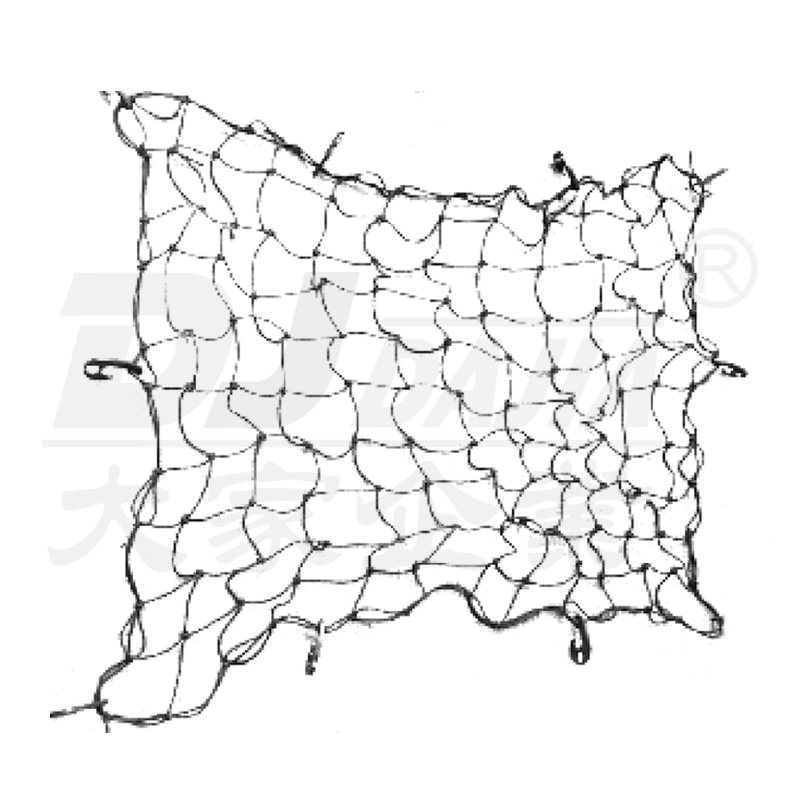
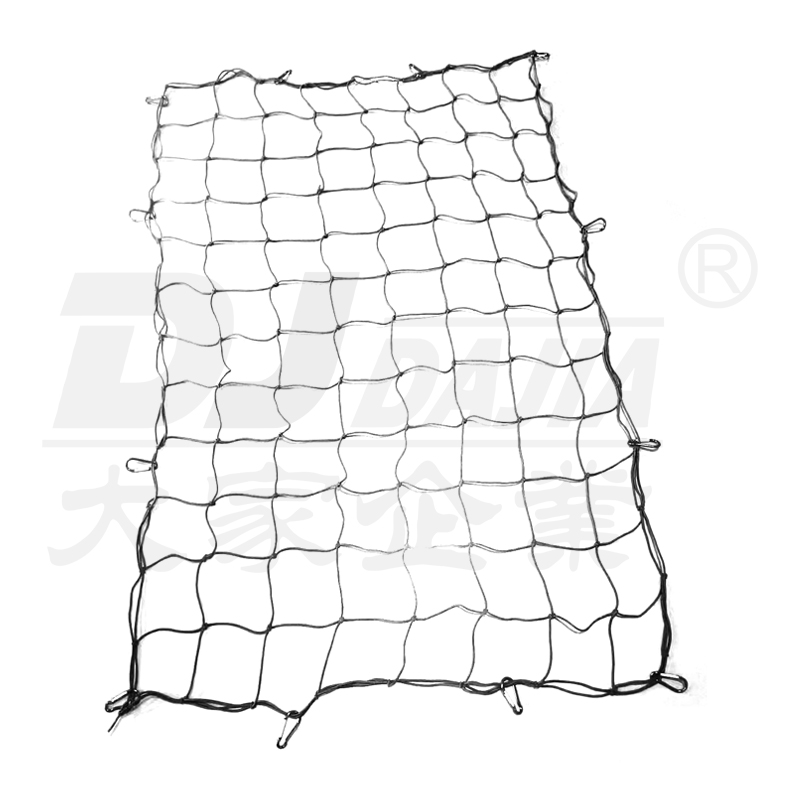
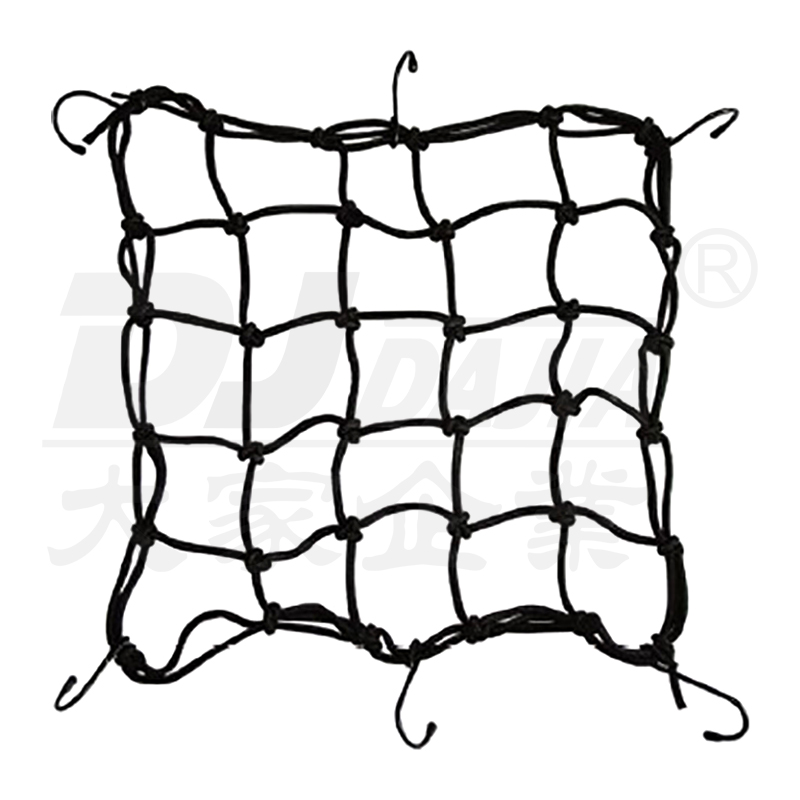
For customers who need a compact, easy-to-store option for standard rear racks, a practical reference point is a net in the 50 × 60 cm class. For example, this ATV retractable cargo net for luggage rack is specified at 4mm × 50 × 60cm and includes 8 plastic hooks, which is typically sufficient for stabilizing everyday gear when the rack has consistent perimeter tubing.
| Specification | Why it matters on an ATV | What to look for |
|---|---|---|
| Footprint size (L × W) | Controls coverage and pre-tension | Net slightly smaller than usable rack; target 10–20% stretch in normal use |
| Cord diameter / structure | Impacts rebound control and fatigue life | Match to load class; thicker cords generally provide more reserve capacity |
| Mesh geometry (e.g., 5×6) | Smaller openings reduce item “push-through” | Choose tighter mesh for tools/loose gear; larger mesh for bulky soft loads |
| Hook count & placement | More hooks improve load distribution on vibration | Corner + midpoint hook positions; verify hooks fit your rack tubing |
| Outdoor resistance | UV and weather drive premature aging | Ask for UV strategy (material choice, additives, or coating) and cold-temperature usability |
Cord, Mesh, and Load: Setting Realistic Expectations
Buyers often ask for “weight capacity,” but an elastic cargo net is not a single-line rating like a lifting sling. The net’s real performance depends on the cargo shape, how evenly the load is distributed, and how the hooks are anchored. As a conservative approach for end users, treat a net as a stabilizer for light-to-medium luggage, not as the only restraint for dense, rigid loads.
Using thickness data in a practical way
Thickness matters because it correlates with elastic reserve and fatigue resistance. A useful reference is typical rubber bungee cord guidance that places many standard cords in the 20–100 lb range depending on thickness. If you want that technical background, see: How much weight a rubber bungee cord can hold. For cargo nets, remember that the load is shared across multiple cords and attachment points—so the system behavior is different—but the engineering principle is the same: higher thickness generally provides more margin against overstretch and snap-back.
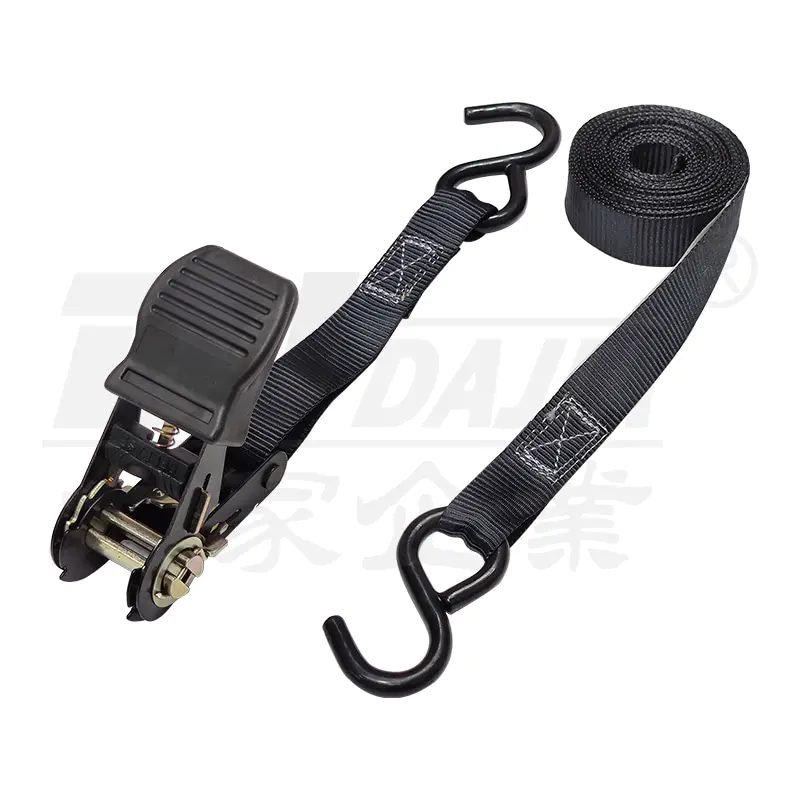
- If your rack frequently carries a fuel can, dense tool kit, or recovery gear, use a “two-layer restraint” approach: net for containment plus a strap for primary retention.
- If your cargo is mostly compressible (camping bags, clothing, rain gear), an elastic net alone is often sufficient, provided the net remains under steady tension.
Hooks and Anchoring: Preventing Slip, Rattle, and Rack Damage
On an ATV luggage rack, hooks experience repeated micro-impacts as the suspension cycles. The hook choice should match the rack finish and the user’s tolerance for noise, scratching, and corrosion. Many buyers prefer plastic hooks for general ATV use because they reduce rack scratching and avoid rust transfer in wet conditions.
Plastic hooks vs. metal hooks (practical trade-offs)
- Plastic hooks: quieter, less abrasive on painted racks, and corrosion-free; ideal for routine cargo like jackets, food packs, small dry bags.
- Metal hooks: typically higher rigidity and better for aggressive tensioning, but may require coating to reduce scratching and rust risk.
If you are comparing configurations for different ATV rack styles (front rack, rear rack, rack extension baskets), it helps to scan the broader ATV elastic cargo nets selection and align hook count, hook type, and footprint to your anchor layout.
Safety note from a supplier perspective: any hook—plastic or metal—should be used so the pull direction is “into” the rack, not outward. A hook that can rotate outward under vibration is the most common cause of unintentional release.
Installation on a Luggage Rack: Tensioning That Stays Stable Off-Road
A good installation is not about maximum stretch; it is about balanced stretch. When the net tension is uneven, the tight side carries most of the dynamic load and fails earlier, while the loose side allows cargo to shift.
A reliable hook pattern (works with most 6–10 hook layouts)
- Hook the four corners first to define the footprint and lock the net orientation.
- Add side hooks next (midpoints), alternating left-right to keep tension symmetric.
- Compress soft cargo slightly before final tensioning; the goal is no free bounce when you press down by hand.
- After the first short ride, re-check: elastic systems settle, especially if the load is compressible.
For cold-weather users, installation ergonomics matter. Elastic nets designed for practical use are expected to remain easy to install even in low temperatures. Product configurations like an 8-hook layout can also reduce the effort required because each hook shares less of the stretch demand.
Maintenance and Service Life: Cleaning, UV, and Routine Inspection
Most early failures are not “sudden” material failures—they are progressive: abrasion at contact points, UV fatigue, and localized overstretch from uneven installation. A simple maintenance routine materially extends service life and reduces the risk of snap-back events.
- Clean with mild soap and water; avoid harsh solvents that can attack rubber or plastics.
- Rinse thoroughly and dry before storage to reduce grit abrasion and odor.
- Store out of direct sunlight when not in use; UV exposure is one of the fastest ways to age elastic products.
- Replace immediately if you see broken strands, cracked hooks, or permanent “overstretched” sections.
If you are sourcing for retail or fleet use, ask your supplier how they manage outdoor durability (material selection, UV strategy, and batch consistency). For broader categories and specifications (including different hook styles and sizes), reviewing the main elastic cargo nets catalog can help you define a consistent standard for your product line.
A Practical Spec Example for Everyday ATV Rack Use
For many ATV owners, the “daily use” requirement is straightforward: hold a mixed set of items—small bags, groceries, trail gear—without constant re-tightening. In that scenario, a compact elastic net with multiple hooks and a controlled mesh often provides the best balance of speed and stability.
One practical configuration is a 4mm cord net built with rubber + PP yarn, sized at 50 × 60 cm, using 8 plastic hooks and a 5 × 6 mesh layout. This design emphasis is on quick connection, even load distribution, and user-friendly handling. You can review the exact configuration here: 4mmX50X60cm ATV Retractable Cargo Net For Luggage Rack.
When to step up to straps instead of a net
If you regularly carry dense, rigid loads (e.g., heavy toolboxes, multiple fuel cans, metal parts), use straps as the primary restraint and use the net for containment. A good rule is: if a single item feels “hard and heavy” enough to damage the rack if it shifts, it should be strapped first.
Done correctly, an ATV retractable cargo net becomes a fast, reliable part of your rack setup—especially for the frequent “grab-and-go” loads where a full tie-down system would slow the rider down. The key is matching size, hook layout, and mesh tightness to your rack and your typical cargo profile.