 EN
EN  Español
 get a free quote

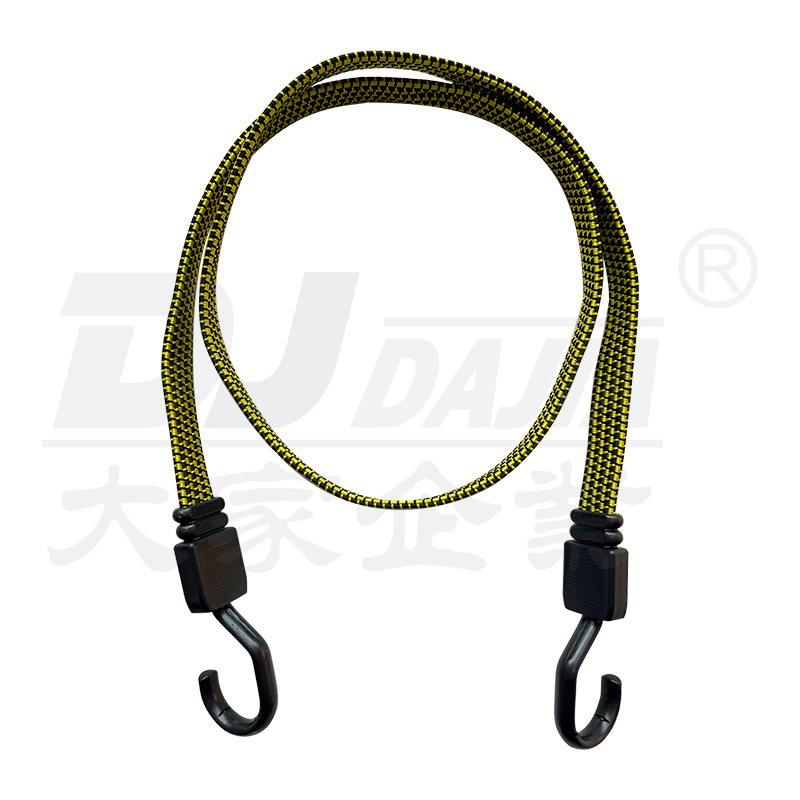
For reliable tie-downs, choose plastic injection steel hooks that fully encapsulate the grip area and pair them with flat bungee cords sized to the hook throat and your target working load. If you match hook geometry, coating, and cord width correctly, you get faster handling, less slip, and fewer corrosion or edge-wear failures.
Fast selection checklist for plastic injection steel hooks and flat bungee cords
A good purchase spec is short and measurable. Start with these items and you will eliminate most fit and durability issues.
- Cord width and thickness: common flat bungee widths are 20–50 mm; confirm thickness at rest so it seats in the hook without folding.
- Hook throat opening: ensure the opening is at least 10–20% larger than the cord thickness for quick loading while still preventing pop-out.
- Steel diameter and grade: specify wire/rod diameter and minimum tensile strength; thicker steel resists opening under shock loads.
- Coating system: zinc plating is common; for wet/salt exposure, add an e-coat or powder topcoat and validate with corrosion testing.
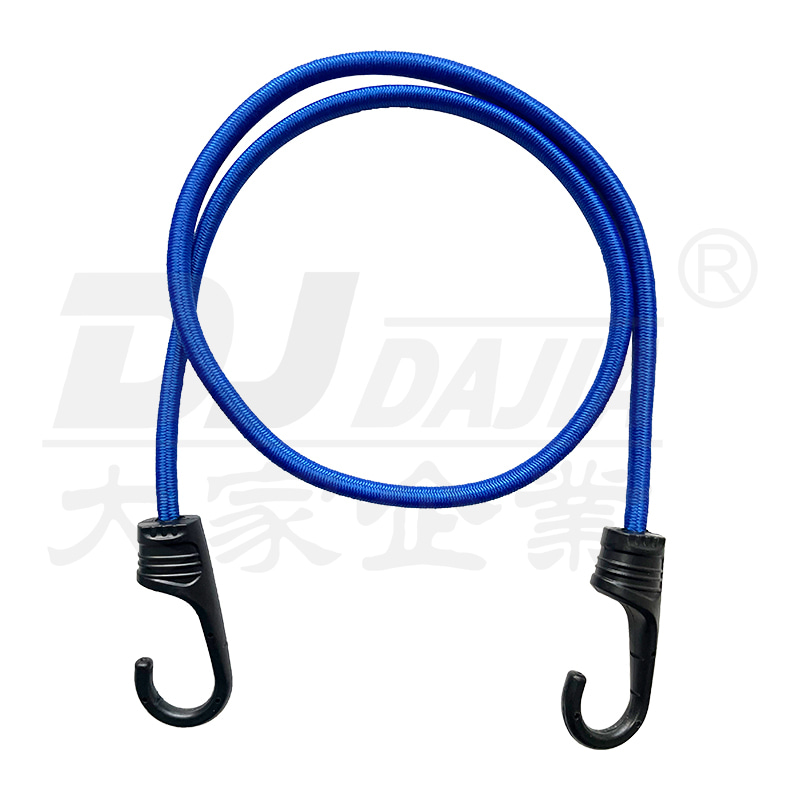
- Plastic injection overmold: require full coverage where hands and cargo contact the hook to reduce cuts, noise, and surface marring.
- Working load target and safety factor: define a working load and test to a higher ultimate load (many buyers use 2–3× as a practical margin, depending on application risk).
Why plastic injection overmolding matters on steel hooks
A bare steel hook can be strong but unpleasant in real use. Plastic injection overmolding improves handling and reduces secondary damage when the hook swings or contacts painted surfaces.
Performance benefits you can specify
- Grip and control: a textured overmold reduces slip when hands are wet or gloved, making loading faster and safer.
- Reduced abrasion: plastic contact points lower the chance of cutting webbing or scuffing cargo compared with sharp edges or rough plating.
- Noise and vibration reduction: overmolded surfaces dampen rattling, especially in vehicle transport.
Overmold design details to include in a purchase spec
Overmold failure is usually a bonding or coverage issue. Require measurable features instead of generic terms like “rubber coated.”
- Coverage map: define the exact zones to be encapsulated (finger areas, cargo-contact nose, and any strap-contact edges).
- Minimum overmold thickness: thin corners split first; specify a minimum at high-stress bends.
- Adhesion expectation: require peel/tear resistance (for example: “no separation after repeated flexing and torsion cycles”).
Steel hook geometry that prevents pop-out and premature wear
With flat bungee cords, the hook must hold a wide, flexible strap-like profile that can twist under load. Geometry is often more important than raw steel strength.
Key dimensions to confirm
- Throat opening: too large increases pop-out risk; too small slows loading and pinches the webbing.
- Inside radius at bends: larger radii reduce stress concentration and reduce cutting/creasing of the cord.
- Tip shape: a rounded or guarded tip reduces accidental snagging and damage to cargo surfaces.
Practical fit test (simple and persuasive)
Ask for a pre-production sample set and run a basic fit test: load the hook onto the intended anchor, apply tension until the cord reaches 1.5× typical working stretch, then twist the cord by hand through 180°. A properly matched hook retains the cord without edge cutting or pop-out.
Flat bungee cord construction choices that change performance
“Flat bungee” can describe different constructions. The internal elastic and the outer webbing determine stretch curve, recovery, and service life.
Stretch and recovery targets (use numbers, not adjectives)
- Typical usable elongation range: many flat bungee cords are used around 30–80% elongation in real tie-down scenarios; define your target to avoid over-stressing elastic.
- Set (permanent stretch): require that the cord returns close to its original length after cycling (for example, minimal length change after repeated stretching).
Webbing and elastic considerations
- Outer webbing: tighter weaves resist abrasion better; UV-stabilized fibers extend outdoor life.
- Elastic core layout: multiple parallel strands distribute load more evenly than a single core, improving fatigue resistance.
- End termination: stitched wrap, crimp, or molded end-cap must match hook style; poor terminations are a frequent failure point.
Quality control tests that catch real-world failures
The most common failures in plastic injection steel hooks and flat bungee cords are: hook opening under shock load, coating corrosion that weakens steel, overmold separation, and webbing/elastic fatigue. The checks below directly target those issues.
Recommended incoming and pre-shipment checks
- Dimensional inspection: measure hook throat, bend radius, and cord width/thickness against your spec.
- Static pull test: pull to a defined working load and higher proof load; verify no hook deformation and no cord slippage at the termination.
- Cycle test: stretch/relax the cord repeatedly (e.g., hundreds to thousands of cycles depending on use) and check for fraying, elastic strand breaks, or excessive set.
- Overmold flex/torque: twist the hook and flex the overmolded zones; reject any cracking or separation at the steel/plastic interface.
- Corrosion screening: for outdoor or marine use, specify a salt-spray or accelerated corrosion test threshold and verify coating continuity.
A practical acceptance rule many buyers use is: no permanent hook opening after proof loading, and no visible overmold separation after flex/torque handling tests.
Spec comparison table for common build options
| Component | Option | Best for | Watch-outs |
|---|---|---|---|
| Steel hook finish | Zinc plated | Indoor or light outdoor use | Corrosion in wet/salt conditions |
| Steel hook finish | Zinc + e-coat/powder topcoat | Frequent outdoor exposure | Ensure coating does not create sharp edges at the tip |
| Plastic injection overmold | Partial grip overmold | Cost-sensitive SKUs | May still mar cargo where steel contacts |
| Plastic injection overmold | Full contact-zone encapsulation | Painted surfaces, consumer-facing products | Validate adhesion with flex/torque tests |
| Flat bungee cord | 20–25 mm width | Light bundling, compact anchors | Lower contact area; higher edge pressure |
| Flat bungee cord | 38–50 mm width | Load distribution on wider cargo faces | Requires larger hook throat and anchor clearance |
Use the table to align your product tiering: entry models often use basic plating and partial overmold, while premium models typically add corrosion protection and full contact-zone encapsulation.
Practical applications and configuration tips
The best configuration depends on how the tie-down is anchored and how often it is used.
- Vehicle cargo and roof racks: prioritize corrosion resistance and overmold coverage to protect paint and reduce noise.
- Warehouse bundling: prioritize fast hook engagement and a tougher webbing face to resist abrasion on pallets and shelving.
- Outdoor equipment: specify UV-resistant webbing and validate that the overmold does not crack in cold temperatures.
Conclusion: the simplest way to avoid returns and failures
The most dependable outcome comes from a short, measurable spec: match hook throat to flat bungee thickness, require plastic injection overmold coverage on all hand and cargo contact zones, and verify strength with pull and cycle testing. When those three elements are controlled, plastic injection steel hooks and flat bungee cords perform consistently across common tie-down and bundling jobs.